Complex Equipment Prescription
Heidelberg & Clayton South, Melbourne | NDIS Registered
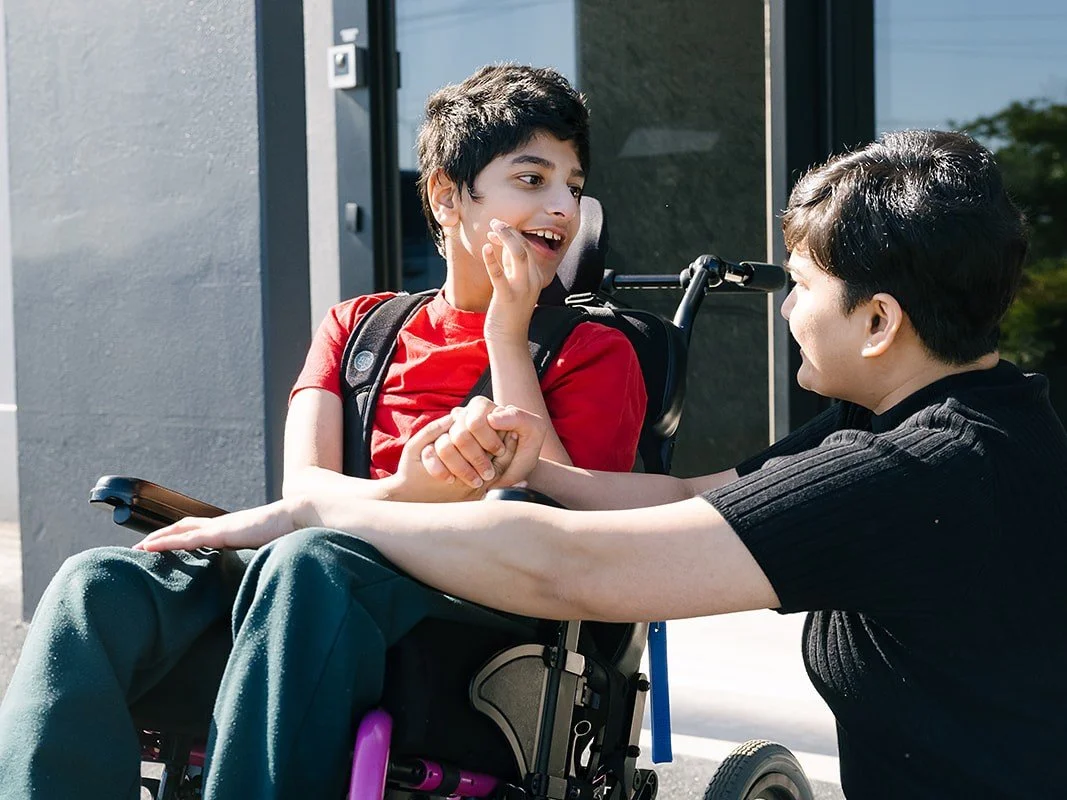
When a child needs specialised equipment to move, rest, sit, stand, or participate in daily life, getting the right fit matters enormously. Equipment that is properly assessed and prescribed can open up new levels of independence, comfort, and participation. Equipment that is not quite right can cause discomfort, limit development, or go unused.
At First Step Therapy Services, our physiotherapists have experience in the assessment, trial, prescription, and reporting of a broad range of paediatric complex equipment — working directly with families, equipment suppliers, and support teams to get it right.
What Is Complex Equipment Prescription?
Complex equipment prescription is the process of assessing a child's individual needs and body measurements, trialling appropriate equipment options, selecting the right product and configuration, and providing the clinical reports needed to support funding applications.
At FSTS, this process is always child-led and family-centred. We take the time to understand your child's goals, daily routines, and what participation looks like for your family — not just what the funding guidelines allow.
Assessments and trials are conducted at equipment supplier showrooms, in your home, at school, or in the community — wherever makes the most sense for your child and family.
Equipment We Assess and Prescribe
Our physiotherapists can support assessment, trial, prescription, and reporting for:
-
Assessment and prescription for powered mobility, including seating configuration and controls.
-
Lightweight, transit, and tilt-in-space manual wheelchair prescription for children of all sizes and needs.
-
Postural seating, specialised chairs, and insert systems to support comfort, positioning, and function.
-
Prone, supine, and upright standers — assessed for fit, positioning, and daily standing programs.
-
Posterior and anterior walkers, rollators, and gait trainers assessed to support safe, functional walking.
-
Measurement and prescription of AFOs in collaboration with orthotists to support gait, alignment, and function.
-
Postural support systems for overnight positioning, assessed for safety, comfort, and spinal alignment.
-
Shower chairs, bath seats, and bathing systems assessed for safe and dignified personal care.
-
Profiling beds, safety rails, and specialist mattress systems for children with complex overnight needs.
-
Additional equipment assessed on a case-by-case basis — contact us to discuss your child's specific needs.
Brands We Work With
Our physiotherapists have experience working with a broad range of trusted paediatric equipment brands, including:
Jenx | Etac | R82 | Convaid | Ormesa | Quickie | Urgoform
We are not aligned to any single supplier. Our recommendation is always based on what best suits your child's clinical needs, goals, and funding situation.
What to Expect
Every equipment journey at FSTS follows a similar process, though we adapt this to suit your child and family:
-
We discuss your child's current equipment, what is and is not working, and what your goals are. This may happen over the phone or at your first appointment.
-
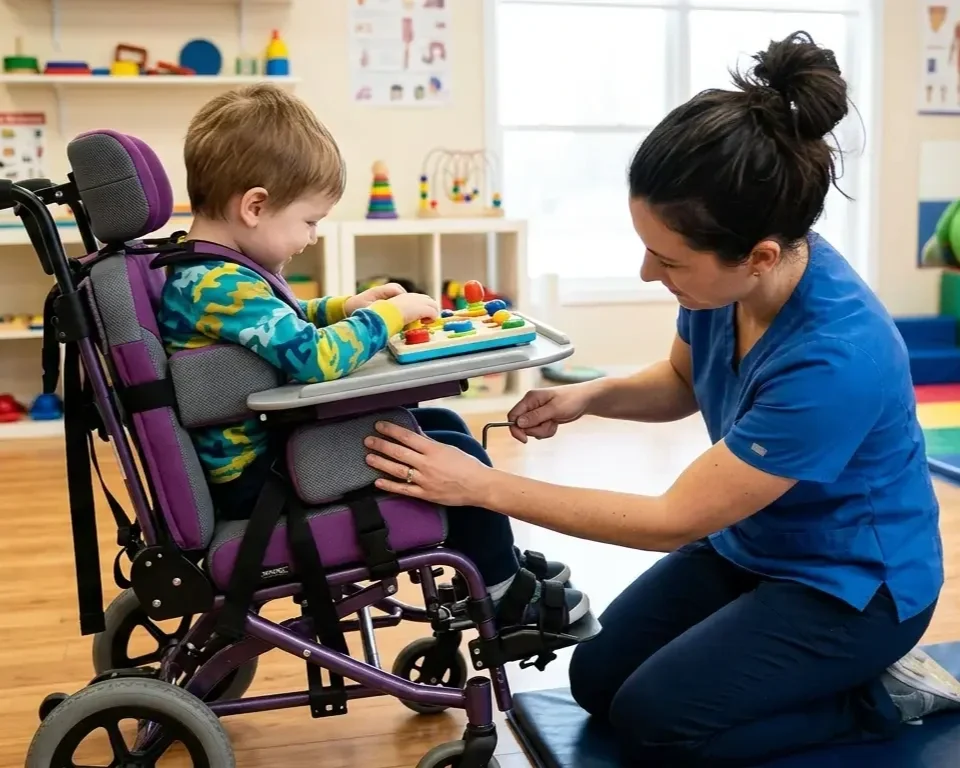
Our physiotherapist assesses your child's body measurements, postural needs, movement patterns, and functional goals. This may involve a standardised postural assessment and photographs for reporting purposes.
-
We arrange trials of relevant equipment options — at a supplier showroom, at home, or at school. Wherever your child is most comfortable and where the equipment will actually be used.
-
We write a detailed clinical report supporting the equipment prescription. This report is used for NDIS funding applications, plan reviews, or private purchase decisions.
-
Once equipment arrives, we may conduct a fitting review to ensure it is configured correctly and working as intended for your child.
NDIS and Equipment Prescription
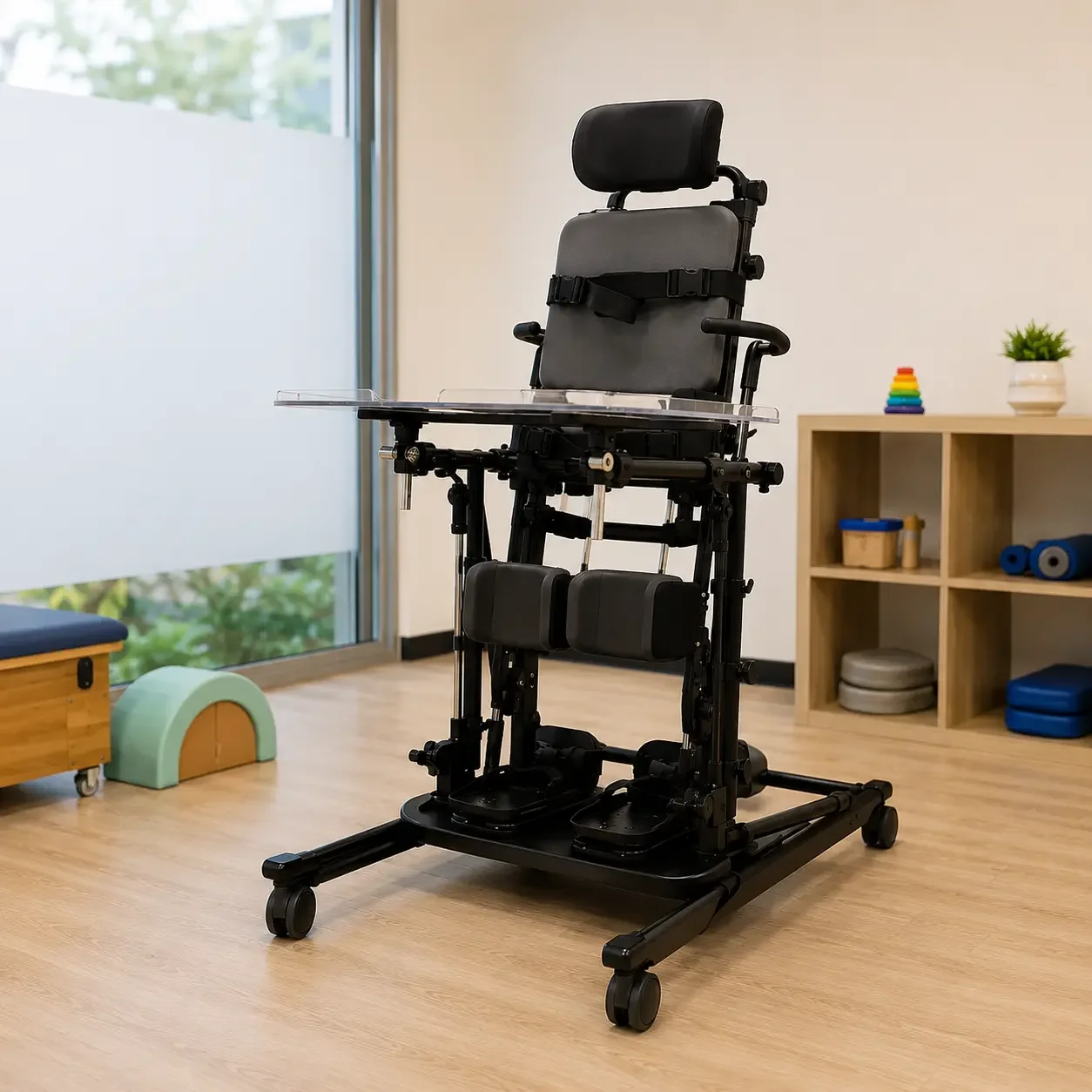
Complex equipment is primarily funded through the Capital Supports — Assistive Technology budget in an NDIS plan. The level of support funding required depends on the complexity and cost of the equipment.
For equipment items valued over $1,500, an AT assessment report from a registered physiotherapist is typically required by the NDIA. FSTS can provide this report as part of the assessment and prescription process.
We work closely with support coordinators, plan managers, and equipment suppliers to make the process as straightforward as possible for families.
Not sure what your child's plan covers? Contact us and we will help you work through it.
Book an Equipment Assessment
We see families across Melbourne's eastern, northern, and south-eastern suburbs from our Heidelberg and Clayton South clinics.