Paediatric Pelvic Floor Physiotherapy for Children
Bladder and bowel challenges in children are more common than most parents realise — and more treatable than many expect. Paediatric pelvic floor physiotherapy takes a whole-child, family-centred approach to supporting children who are struggling with continence, toileting, or related movement and coordination difficulties.
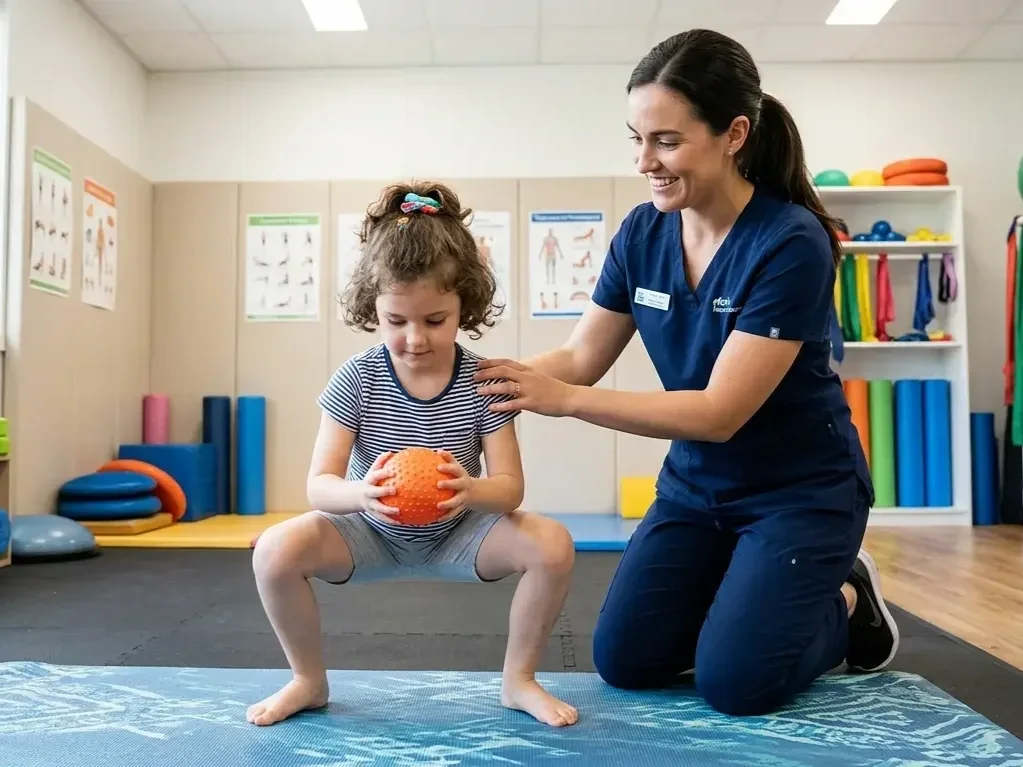
At First Step Therapy Services, our physiotherapists work with children in a calm, play-friendly environment. Sessions are always led by your child's comfort and your family's goals.

What Is Paediatric Pelvic Floor Physiotherapy?
The pelvic floor is a group of muscles that supports the bladder, bowel, and other pelvic organs. In children, these muscles play a key role in developing the coordination needed for toileting, holding on, and emptying fully.
Paediatric pelvic floor physiotherapy looks at how these muscles are working alongside your child's posture, movement, breathing, and sensory processing. It is non-invasive, child-friendly, and always explained in age-appropriate language — for both children and their parents.
What to Expect in a Session
The first session is an opportunity for us to understand your child and your family. We do not rush into assessment — we take time to make your child feel comfortable first.
A paediatric pelvic floor assessment at FSTS may include:
A detailed conversation with parents about your child's history, routines, diet, and fluid intake
A movement and posture observation (fully clothed)
Discussion of toileting habits and patterns
Observation of sitting position and toilet posture
Education for parents and children about how the bladder and bowel work
Development of an initial management plan that suits your family's routine
There is no internal examination in paediatric pelvic floor physiotherapy. Assessment is always external, observational, and guided by what your child is comfortable with.
Conditions We Can Support
Paediatric pelvic floor physiotherapy may support children experiencing:
-
Daytime wetting (urinary incontinence)
Bedwetting (nocturnal enuresis)
Urgency — needing to rush to the toilet
Frequency — going to the toilet more often than expected
Difficulty fully emptying the bladder
Urinary tract infections that keep returning
-
Constipation or infrequent bowel movements
Soiling or encopresis (bowel leakage)
Withholding behaviours
Pain or discomfort with toileting
-
Toilet refusal or toileting anxiety
Difficulty with the physical mechanics of sitting, positioning, or relaxing on the toilet
Delayed toileting independence
-
Children with hypermobility or low muscle tone who are finding toileting challenging
Children with autism, ADHD or sensory processing differences where toileting routines are difficult
Children with cerebral palsy or other neurological conditions affecting pelvic floor coordination
Children who have previously experienced constipation-related overflow
Is This Right for My Child?
You may find paediatric pelvic floor physiotherapy helpful if your child:
Is still wetting the bed beyond age 5–6, or daytime wetting beyond age 4
Frequently complains of tummy pain or difficulty going to the toilet
Holds on for long periods and rushes urgently when they do need to go
Has been told they have constipation that isn't resolving with diet changes alone
Is anxious about toileting or avoids public toilets
Has a diagnosis that affects muscle tone, coordination, or sensory processing
Has had urinary tract infections more than once
We recommend discussing your child's situation with your GP or paediatrician as well. Physiotherapy works best as part of a coordinated care team!
NDIS and Paediatric Pelvic Floor Physiotherapy
Paediatric pelvic floor physiotherapy may be funded under an NDIS plan where the child's bladder or bowel challenges are linked to their disability. This may be covered under Capacity Building — Daily Activities or Core Supports, depending on your child's plan and goals.
First Step Therapy Services is a registered NDIS provider. We can support you with understanding how physiotherapy goals may align with your child's NDIS plan, and we work collaboratively with support coordinators and plan managers!
Not sure if your child's plan covers this? Contact us and we'll help you work it out.
Book an Appointment
Our clinics are based in Heidelberg and Clayton South, and we also offer home and community-based sessions across Melbourne's eastern, northern, and south-eastern suburbs!